Mapúa MCL holds Inclusive Teaching Strategies for Neurodivergent Students
By: Rachelle Anne A. Abel and Francis Dominic D. Fernandez
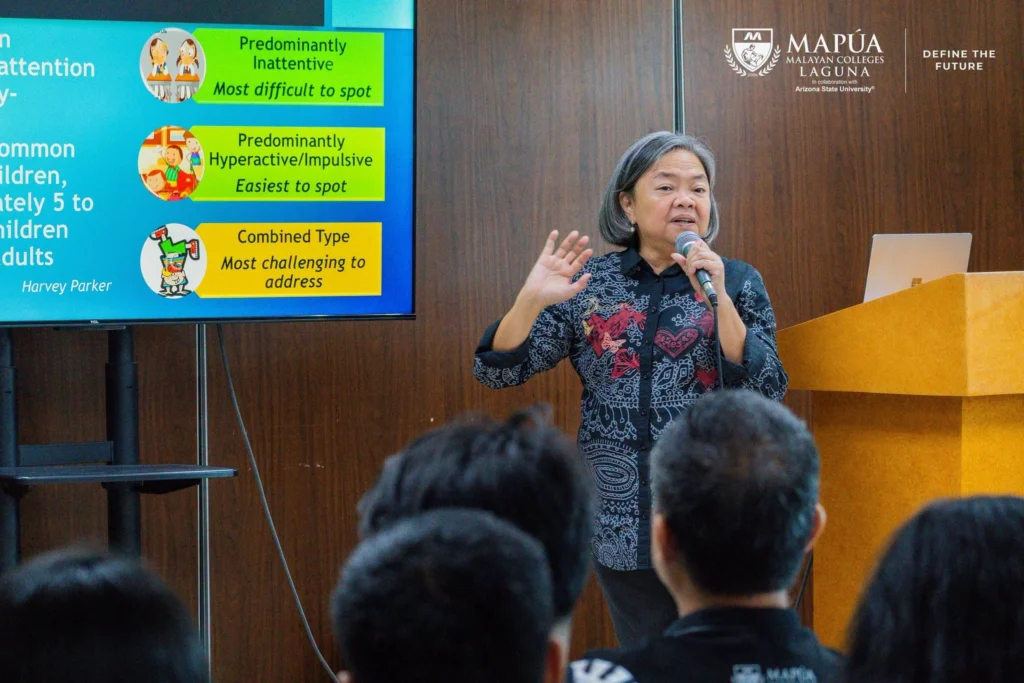
Mapúa Malayan Colleges Laguna’s (Mapúa MCL) Center for Guidance and Counseling (CGC), along with the Human Resources Management Office (HRMO) and Mapúa MCL Senior High School (Mapúa MCL-SHS), held a seminar on practical strategies for creating inclusive, barrier-free learning environments titled “Teaching Beyond Labels: Effective and Inclusive Strategies for Neurodivergent Students” on June 9, 2026.
Hosted at the Einstein Building’s E311–E315 and via Zoom, the seminar was opened by Atty. Maria Eloisa R. Gan, Senior Vice President for Administration and Legal. Atty. Gan shared a heartfelt personal experience raising her son, emphasizing that nothing is wrong with positive or negative labels unless they are allowed to define a person. Her message set a reflective tone for the seminar, reminding faculty members to look beyond categorizations and focus on the individual.
Ms. Angelica Cecille C. Ortiz-Kare, head of the Center for Guidance and Counseling, introduced the guest speaker, Dr. Merlene M. Alon, School Director of Alpha Angelicum Academy. Alpha Angelicum Academy is recognized for its inclusive approach to educating neurodivergent students.
Dr. Alon began her session with a collaborative activity called Think-Pair-Share (TPS) where faculty members would share with their co-faculty members difficult experiences with handling a student. These insights were useful for a workshop activity at the end of the seminar.
The discussion highlighted several key concepts in understanding neurodivergent students. Dr. Alon explained that exceptional children differ from normal children to such an extent that an education program is required to meet their additional needs. Their giftedness can mask their special needs, and their special needs can hide their giftedness.
A significant point raised was the concept of asynchronous development, where a child’s intellectual growth may far exceed their emotional, social, or physical development. This imbalance, rather than being a flaw, is a defining feature of giftedness that has wide implications for how these children experience school and relationships.
The seminar also addressed neurodevelopmental conditions such as autism and ADHD. Autism, described as a spectrum, encompasses a wide range of abilities from individuals requiring substantial support to those who are highly gifted. Some learners may even be twice exceptional, meaning they are both gifted and disabled at the same time.
Attention-Deficit/Hyperactivity Disorder (ADHD) is a medical condition characterized by inattention and/or hyperactivity impulsivity. One of the most common disorders among children, affecting approximately 5% to 7% of school-age children and about 2–5% of adults. Dr. Alon emphasized that ADHD is not a problem of willpower, inadequate parenting, lack of motivation, lack of intelligence or laziness, but rather a problem of engagement. She also noted that autism and ADHD can coexist in some individuals.
Another critical insight discussed was the mismatch that can occur between a student’s learning style and a teacher’s instructional approach. Dr. Alon encouraged educators to identify the “entry point” for each learner to create more effective and responsive teaching strategies. Additionally, she highlighted that gifted individuals often experience emotions with greater intensity, which requires sensitivity and understanding in the classroom.
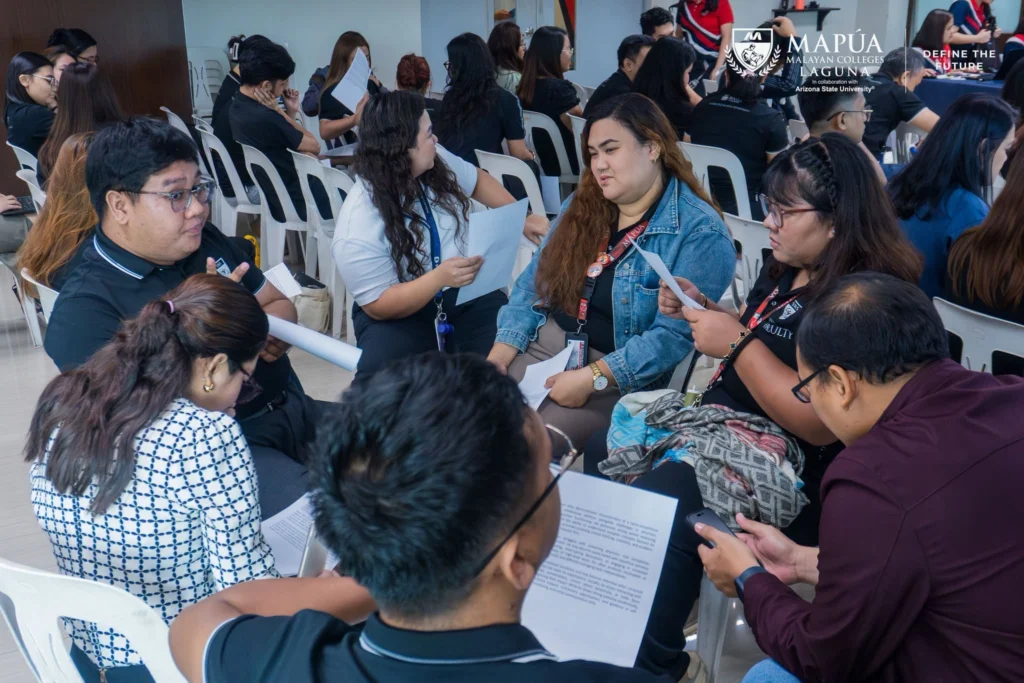
The seminar concluded with a workshop where faculty members were divided into groups and given case studies to analyze. This activity allowed participants to apply their learnings in a practical and collaborative setting. It served as both a reflection and an assessment of the insights gained throughout the session.
Overall, the seminar reinforced the importance of moving beyond labels and adopting inclusive, flexible teaching practices. By understanding the diverse needs and strengths of neurodivergent students, educators can create learning environments that are not only supportive but also empowering for every learner.
The seminar supports the institution’s commitment to advancing the Sustainable Development Goals (SDGs) 3: Good Health and Well-Being, 4: Quality Education, and 10: Reduced Inequalities.