Building Skilled and Compassionate Nurses Through Nursing Courses
The BS Nursing program at Mapúa MCL molds compassionate, competent nurses by integrating rigorous, holistic patient care training with global academic standards to address complex health challenges in local and international settings.
Key Takeaways
- Due to the increasing global mobility of nurses and the strong correlation between baccalaureate preparation and better health outcomes, international guidelines are being strengthened.
- Modern BSN education incorporates intensive practical training, advanced facilities, and strategic partnerships to ensure adherence to international standards and prepare graduates for global readiness.
- The core mission of nursing courses is to cultivate competent, compassionate, and socially responsible nurses who provide holistic care to individuals and communities, applying evidence-based practice and strong interdisciplinary collaboration skills.
Healthcare is evolving faster than ever. At the heart of every breakthrough, every improved patient outcome, and every resilient community is a competent and compassionate nursing workforce. Modern nursing education must go beyond teaching clinical basics; it must shape professionals who can think critically, lead with empathy, and adapt to the demands of complex and global healthcare systems.
A comprehensive Bachelor of Science in Nursing (BSN) program does exactly that. It builds a strong foundation in science, ethics, and hands-on practice, empowering future nurses to elevate patient care, strengthen communities, and make a lasting impact in the world of health and wellness.
The Core of Care: Holistic and Compassionate Patient Focus
The primary objective of courses in nursing is to prepare graduates who are competent, compassionate, and socially responsible. The program focuses explicitly on delivering safe, holistic care to individuals and communities, teaching students how to assess, plan, implement, and evaluate care for diverse patient needs. Ultimately, future nurses are trained to provide care that respects patients’ dignity and individuality.
This means that nursing students are expected to:
- Apply knowledge of physical, social, natural, and health sciences, alongside humanities, in the practice of nursing.
- Provide safe, appropriate, and holistic care to individuals, families, and communities utilizing the nursing process.
- Practice nursing in accordance with existing laws, as well as legal, ethical, and moral principles.
- Work effectively in collaboration with inter-, intra-, and multi-disciplinary teams.
- Engage in lifelong learning with a passion to keep current with national and global developments in nursing and health.
Caring and collaboration also extend to interdisciplinary work. Students studying nursing are expected to recognize healthcare as a team effort wherein nurses collaborate effectively with other healthcare professionals to deliver comprehensive care focused on the whole person.
The Enduring Legacy of Filipino Nurses
Filipino nurses are recognized globally as a cornerstone of the healthcare industry due to their unwavering dedication, exceptional skills, and compassionate care. They are highly regarded worldwide for their impact on countless individuals, demonstrating a strong work ethic even through long working hours and demanding shifts.
However, the global demand for highly trained Filipino nurses leads to challenges locally. Many choose to migrate for better employment opportunities, higher wages, and career advancement, contributing significantly to the global healthcare workforce. This migration can result in chronic understaffing within local hospitals and health centers.
Global Standards and Local Impact
Due to the increasing mobility of nurses, there is an urgent need to align nursing courses with international standards. The demand for well-educated nurses has led to a call for strengthened guidelines for nursing education.
For example, the Global Pillars Framework, developed by the Global Alliance for Leadership in Nursing Education and Sciences (GANES), serves to promote greater international consistency. The framework focuses on three pillars of global expectations:
- Pillar I: Competency Expectations: Learning outcomes for graduating nurses cover areas like knowledge, practice skills, communication, collaboration, critical thinking, and leadership.
- Pillar II: Program Guidelines: Expectations for nursing programs concern the curriculum, admissions, and learning experiences (e.g., responsiveness to local context and integration of interprofessional education).
- Pillar III: Institutional Guidelines: Expectations for educational institutions involve faculty expertise, resources (including library and internet for evidence-informed practice), and administration.
By adhering to high academic standards and international competencies, modern nursing programs ensure that their graduates are ready for careers in specialized fields, whether within their local communities or on the global stage.
Foundations of Excellence: Modern Nursing Courses at Mapúa MCL
A robust nursing program, such as the BSN degree offered by Mapúa Malayan Colleges Laguna (MCL), combines theoretical knowledge with extensive practical application. The courses in nursing cover core areas, such as the fundamentals of nursing, community health, and nursing research, all threaded through an outcomes-based education.
Cultivating Clinical Competence
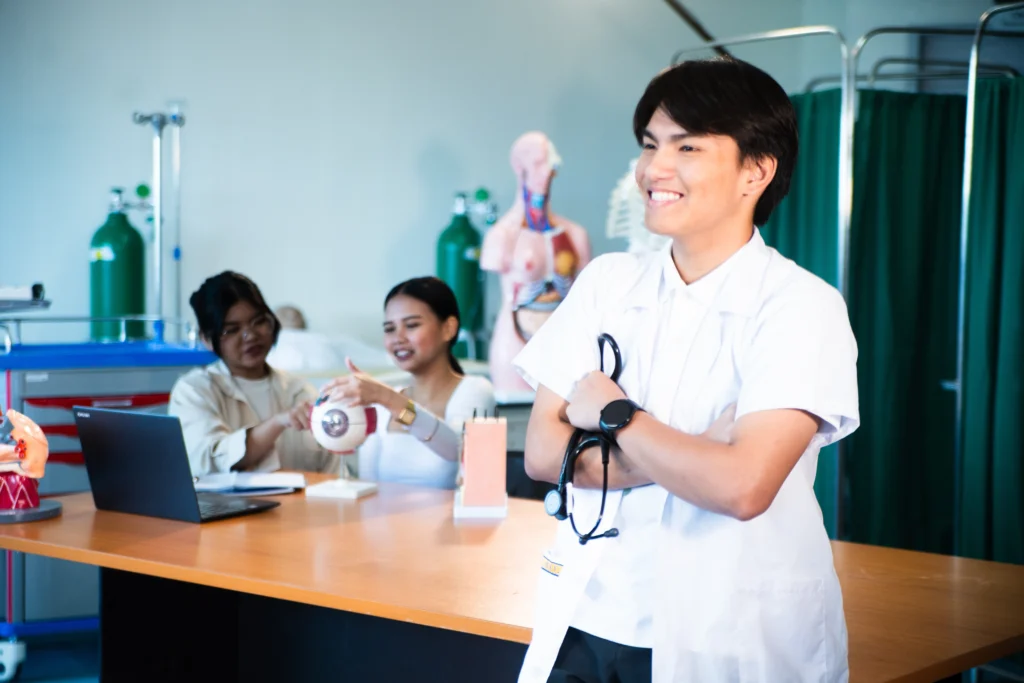
Hands-on training is a critical component of nursing. Training must refine clinical skills from the very first year to ensure foundational competencies for beginner nurse practitioners. Mapúa MCL students benefit from state-of-the-art facilities, including simulation centers and technologically advanced classrooms that replicate real-world healthcare settings.
Global Academic Partnership
To ensure nursing education aligns with international standards, Mapúa MCL prioritizes global collaboration. This is exemplified by the enhancement of the nursing courses through a collaboration with Arizona State University®, which is recognized as the #1 most innovative university in the U.S. for ten consecutive years.
This collaboration ensures alignment with international standards of nursing education and provides students with global readiness and access to cutting-edge resources, empowering students with real-world experiential learning, world-class facilities, and digital mastery. Graduates are consequently equipped with the necessary global perspective to thrive in the healthcare field, both in the Philippines and around the world.
Practical experience is structured through learning components like the Related Learning Experience (RLE), which includes clinicals and skills laboratory sessions. Students also gain invaluable clinical exposure through actual healthcare facilities, where they apply classroom learning to patient care under the guidance of experienced professionals. This intensive practicum prepares students to excel in various healthcare settings and meet diverse patient needs.
Shape Your Future in Nursing with a Strong BSN Foundation
Studying nursing demands a specialized education that integrates rigorous theory with compassionate practice and adherence to global standards. For those ready to answer the call to service, the Mapúa MCL College of Nursing offers a Bachelor of Science in Nursing (BSN) degree designed to deliver a world-class educational experience.
Through its unique collaboration with Arizona State University®, the program ensures students gain global readiness and digital mastery, preparing them for careers in the Philippines and globally. With a curriculum focused on delivering safe, holistic care and equipping graduates with competencies for specialized roles, Mapúa MCL provides the strong foundation necessary to positively influence community health and well-being.
Explore the Mapúa MCL College of Nursing today and begin your journey toward a globally competitive profession.
Frequently Asked Questions
What is the main advantage of the Mapúa MCL Bachelor of Science in Nursing (BSN) program?
Nursing courses at Mapúa MCL are distinguished by its collaboration with Arizona State University®, which is ranked as the #1 most innovative university in the U.S. for ten consecutive years. This collaboration provides students with advanced and immersive facilities, world-class content, and digitally enhanced learning methods, ensuring they achieve global readiness and digital mastery.
How does the program ensure students gain sufficient hands-on experience?
The curriculum mandates an intensive practicum designed to refine clinical skills starting from the first year, establishing foundational competencies for beginner nurse practitioners. This includes a structured Related Learning Experience (RLE) featuring clinical rotations and skills laboratory sessions to develop competence in various health situations.
Is nursing a stable career choice for aspiring students?
Yes, students studying nursing have a wide range of career options, including specialized roles such as Emergency Room (ER) Nurse, Critical Care Nurse, Public Health Nurse, and Nurse Administrator, allowing for extensive professional development and a fulfilling career in healthcare.