ASEAN AI Hackathon 2026 Opens with Collaborative Learning and Human-Centric Innovation
By: Cinderella Manalang
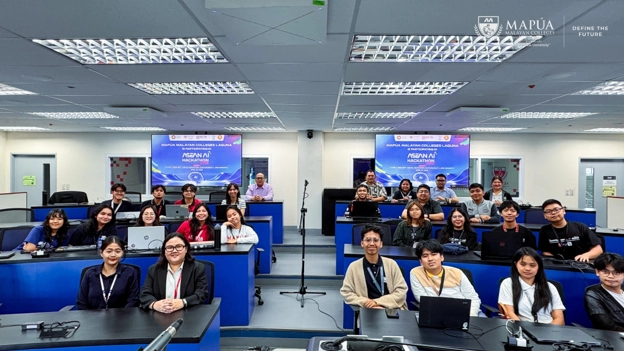
The ASEAN AI Hackathon 2026 officially commenced on April 23, 2026, with an Opening Ceremony followed by two engaging workshops that set the tone for months of collaborative learning and innovation across Southeast Asia. The program is organized by Passage to ASEAN (P2A) in collaboration with Mapúa Malayan Colleges Laguna (Mapúa MCL), Polytechnic University of the Philippines (PUP), and Duy Tan University, Vietnam.
The first workshop session was led by Mapúa MCL featuring Dr. Teodoro F. Revano Jr., faculty member of the College of Computer and Information Sciences (CCIS), who delivered a lecture titled “Human-Centric AI & Regional Problem Solving: Setting the Stage.”
Dr. Revano’s session highlighted the importance of developing AI solutions that are inclusive, ethical, and responsive to the diverse needs of ASEAN communities. His discussion emphasized the role of responsible technological advancement and the need to place people and societal impact at the center of innovation.
The session concluded with an interactive question-and-answer segment, where participants actively engaged with the speaker to deepen their understanding of human-centric AI concepts and explore their practical applications in addressing regional concerns.
Reflecting on his experience as a speaker and mentor in the program, Dr. Revano shared his appreciation for the collaborative spirit demonstrated throughout the event.
“Being a guest speaker and lecturer at the ASEAN AI Hackathon was an honor and a valuable experience. It was exciting and encouraging to see students and participants from different Asian countries work together, share ideas, and develop new AI-based solutions. Not only did the event show off the participants’ skills and creativity, but it also showed how technology can bring together different Asian countries and points of view.”
For him, the value of hackathons extend beyond competition and recognition. He encouraged students to maximize opportunities for growth and experimentation.
“Students who are competing should remember that their ideas matter. Hackathons are valuable not only for the prizes but for the lessons, networks, and experiences gained throughout the journey. Do not be afraid to try new things, fail, and learn from mistakes. Curiosity and the willingness to fail are often what spark creativity.”
In the afternoon, the second workshop was facilitated by PUP under the theme “Technical Architecture and Data.” The session featured a technical walkthrough and a guided mini workshop to strengthen participants’ understanding of system architecture and data considerations in AI development. An open forum and question-and-answer session followed, allowing students to clarify concepts and engage in deeper discussions about technical implementation.
The opening sessions mark only the beginning of the ASEAN AI Hackathon 2026 journey, which will continue until July 2026 through a series of workshops, coaching sessions, and collaborative activities designed to strengthen technical competencies and cross-cultural partnerships among participants.
Computer Science students from Mapúa Malayan Colleges Laguna are actively participating in the competition, contributing to regional conversations on innovation and reinforcing the institution’s commitment to developing globally competitive and socially responsible technology professionals.
For participating students, the workshops served not only as technical learning opportunities but also as platforms for innovation and purpose-driven problem-solving.
Sophia Narcelles, a third-year B.S. Computer Science student and a hackathon participant, emphasized how the sessions strengthened their confidence in turning ideas into solutions.
“Every idea here is a great idea, with a real pain point in mind and a genuine problem that participants want to solve. With the learnings we gained from the workshop, we are one step closer to making those innovations come to life.”
Meanwhile, Shamelle Fhate Climaco, also a third-year B.S. Computer Science student and a hackathon participant, reflected on the importance of creating technologies that prioritize people and social good.
“I am most looking forward to seeing technology that cares. Every day, we are confronted with the negative effects of modernization and advanced technologies such as AI. As future professionals entering the tech industry, it is our responsibility to counter those challenges and create meaningful, positive, and lasting change. After all, technology is meant to be humanity’s tool—not its enemy.”
Prof. James Ronald O. Mesina highlighted the significance of initiatives such as the ASEAN AI Hackathon in sustaining global engagement without the need for outbound mobility.
“Mapúa MCL is pushing for home-based IZN activities that will not require outbound travel. Regional and global competitions are good opportunities for our students to demonstrate what they have learned inside the classroom. This is a good outcomes-based education (OBE) initiative.”
As the ASEAN AI Hackathon continues in the coming months, the exchange of ideas, technical knowledge, and cultural perspectives among participants is expected to further inspire innovative solutions that address both local and regional challenges.
This initiative aligns with the United Nations Sustainable Development Goals (SDGs), particularly SDG 4: Quality Education and SDG 17: Partnerships for the Goals, reinforcing the importance of collaboration, innovation, and inclusive learning in shaping the future of artificial intelligence across ASEAN.