

ETYCB and College of Nursing hold First Aid and Basic Life Support Training
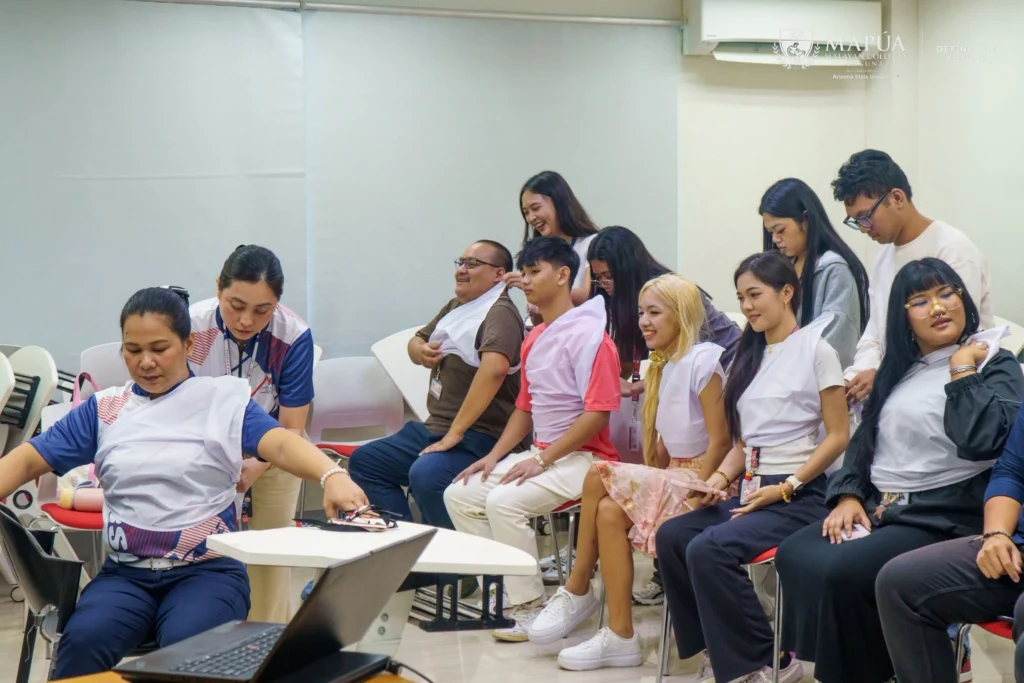
Mapúa Malayan Colleges Laguna’s (Mapúa MCL) E.T. Yuchengco College of Business (ETYCB) strengthened its commitment to applied, industry-relevant learning through a First Aid and Basic Life Support (BLS) Training conducted on 11 September 2026 for students enrolled in C-OPM118: Special Topics in Operations Management.
Proposed by Noel Eric B. Ang, MBA, MQM, Program Chair for BS Business Administration, the initiative was developed in line with the recommendations of the PAP and designed as a meaningful collaboration between ETYCB and the College of Nursing. The activity recognized a vital reality of modern operations: future managers, supervisors, and decision-makers must be prepared not only to manage systems and resources, but also to protect people when emergencies occur.
ETYCB extends its deepest gratitude to Dean Mariven Pavino for supporting the collaboration and helping make the training possible. Special recognition is likewise given to the Nursing instructors—Catherine Pobeda, RN; Frances Rica Antonio, RN; and Cecille W. Barrera, RN, MAN—whose expertise, patient guidance, and hands-on instruction transformed essential emergency concepts into a meaningful practical experience for the students.
The training combined demonstration, guided practice, and workplace-based decision-making. Students worked with triangular bandages and learned practical methods of securing and supporting injuries. They were introduced to the principles of Basic Life Support, including early recognition of cardiac arrest, proper activation of emergency assistance, high-quality CPR, and the importance of early AED use. The session also reinforced that effective emergency response begins with scene safety: identifying hazards, using appropriate personal protective equipment, calling for help, and ensuring access for professional responders.
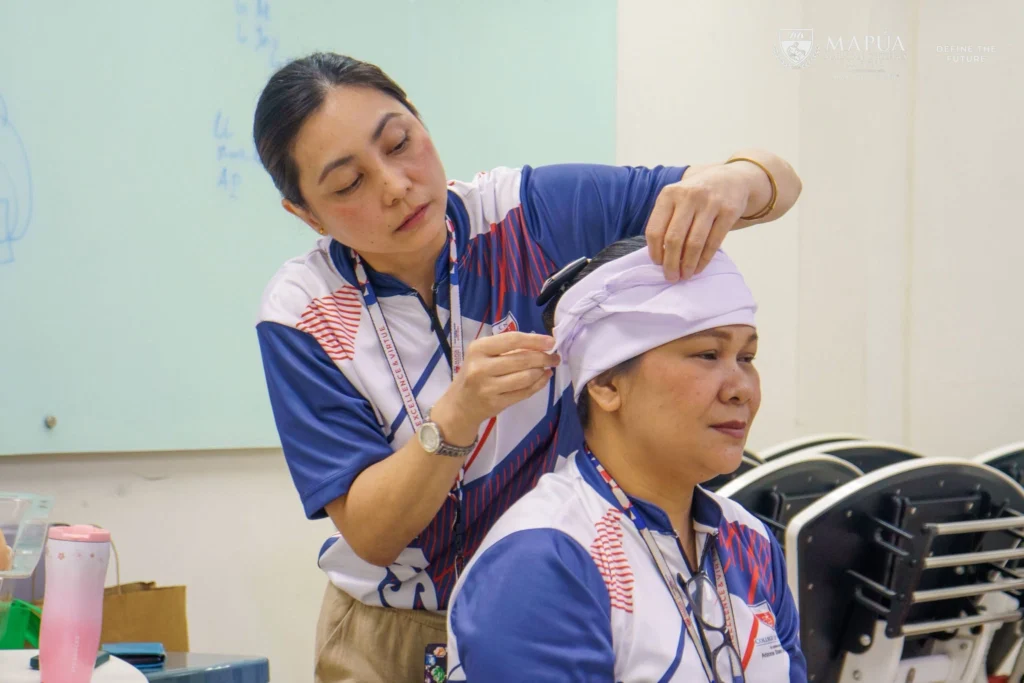
Beyond individual skills, the learning materials emphasized a more complete workplace-readiness framework. Students explored the ABCDE approach to emergency assessment—Airway, Breathing, Circulation, Disability, and Exposure/Environment—along with medical triage, bleeding control, safe bandaging, reassessment, escalation, and structured handover. These lessons made clear that first aid is not simply a collection of isolated techniques. It is a coordinated operational process that requires sound judgment, teamwork, communication, and awareness of one’s limits.
The student’s reflections affirm the value of this practical approach. Lindsey shared that she initially expected the session to be boring or purely theoretical, but found the triangular-bandage practice engaging, enjoyable, and useful. She also recognized that additional CPR practice would help students become more confident in responding to real emergencies.
For Katrina, the activity demonstrated that “it is really different when you are the one actually doing it.” She reflected that the experience helped her appreciate the importance of remaining calm and acting correctly when someone needs assistance. As a future Operations Management professional, she saw the training as directly relevant to maintaining safer workplaces and protecting people during unexpected incidents.
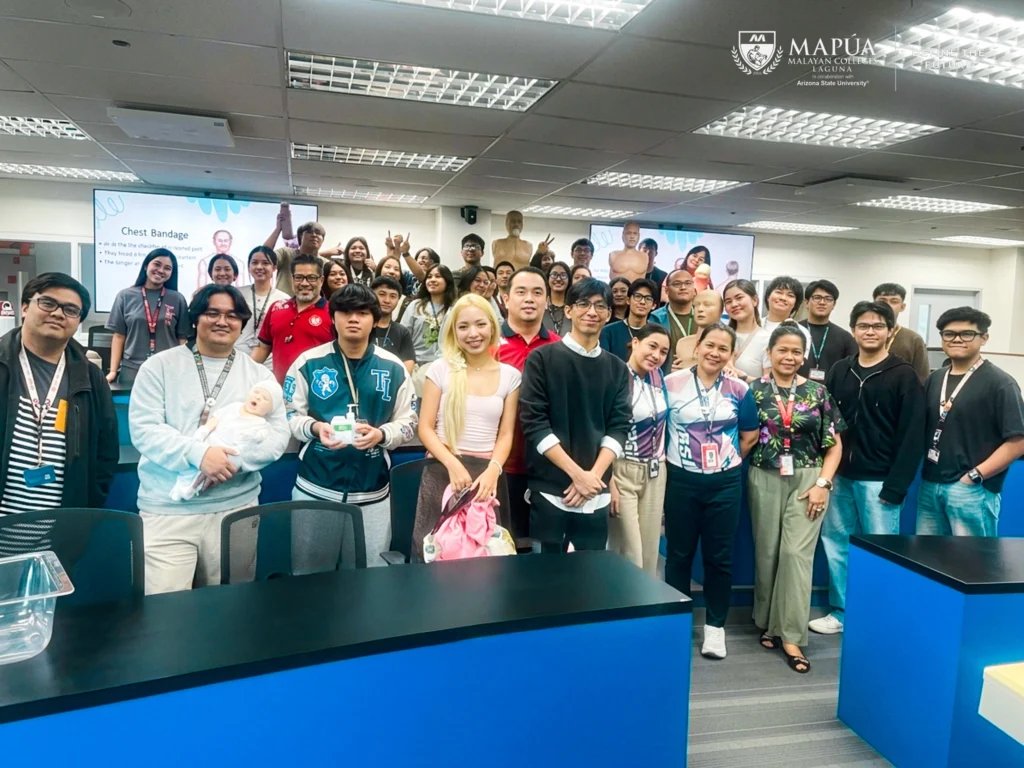
What makes this initiative particularly significant is its interdisciplinary design. It brings together the operational perspective of ETYCB and the clinical expertise of the College of Nursing, allowing students to connect workplace management with human safety, emergency response, and organizational responsibility. Rather than treating first aid as a compliance requirement or a one-time lecture, the program positions it as a core operational capability.
The training also establishes a replicable model for meaningful learning: evidence-based pre-reading, expert-led instruction, hands-on practice, student reflection, and continuous skills development. The students’ request for more CPR practice is not a limitation of the activity—it is evidence of genuine engagement and a strong foundation for future refresher sessions.
Through this collaboration, ETYCB and the College of Nursing have demonstrated how academic units can work together to equip students with practical competence, confidence, and a deeper sense of responsibility. In an emergency, knowledge matters—but the ability to recognize danger, act safely, coordinate with others, and help preserve life matters even more.