Charting the Course: Maritime Education and Career Paths in Laguna
Malayan Colleges Laguna’s (Mapúa MCL) specialized maritime training programs prepare globally competitive graduates for diverse careers at sea and on shore by aligning rigorous standards with essential soft skills development.
Key Takeaways
- Mapúa-PTC College of Maritime Education and Training (CMET) provides programs like the Bachelor of Science in Marine Transportation and the Bachelor of Science in Marine Engineering, which are aligned with the education and training requirements of the STCW Convention.
- Technology and practical application ensure graduates are prepared to use modern tools, apply knowledge in mathematics and science to solve profession-related problems, and operate complex machinery.
- Beyond technical proficiency, Mapúa MCL emphasizes holistic development through partnerships, such as the “Beyond the Deck” soft skills development program with the Fair Training Center (FTC). This initiative empowers future seafarers with the soft skills needed to thrive professionally and personally in global careers.
The global maritime industry demands highly skilled and technologically proficient professionals. Mapúa Malayan Colleges Laguna (Mapúa MCL) is serving as a vital hub for developing the next generation of global maritime practitioners. Through strategic partnerships and curricula aligned with international standards, Mapúa MCL prepares students not just for careers at sea but for leadership roles.
Anchoring on Global Standards
Mapúa MCL’s maritime programs, offered through the Mapúa-PTC College of Maritime Education and Training (CMET), were established in 2008 in partnership with the Philippine Transmarine Carriers Inc. (PTC). This enabled Mapúa MCL to implement programs that build core competencies in marine engineering, seamanship, and maritime business.
The curricula for both major maritime programs are continuously organized, planned, and periodically reviewed to ensure compliance with the latest industry standards, equipping graduates with the skills necessary to remain globally competitive. The institution itself maintains a strong global standing in teaching and research, recognized as a Quacquarelli Symonds (QS) 3-star institution and a Times Higher Education Impact Rankings University. The focus is on providing rigorous academic grounding combined with practical training, technical knowledge, safety protocols, and real-world skills. Finally, Mapúa MCL is the only maritime school in Asia recognized by the Belgium FPS Mobility – DG Shipping, formerly known as BMI (Belgian Maritime Inspectorate). This further cements Mapúa MCL’s status as a maritime institution with world-class programs.
Dual Pathways to a Global Career: Marine Transportation and Engineering
Mapúa MCL offers two distinct pathways for aspiring global seafarers: the Bachelor of Science in Marine Transportation and the Bachelor of Science in Marine Engineering.
BS Marine Transportation
BS Marine Transportation provides the mandatory education and training required for Officers in Charge of a Navigational Watch under Regulation II/1 of the STCW Convention. Graduates are prepared to become competent merchant marine deck officers on seagoing ships of 500 gross tonnage or more.
Future deck officers are expected to apply knowledge in mathematics, science, and technology to solve professional and workplace problems, and they must conduct research using appropriate methodologies. Graduates are also molded to act in recognition and practice of professional, social, and ethical accountability.
Career pathways for graduates of BS Marine Transportation include:
- Merchant Marine profession
- Maritime Industry
- Ship Building and Repair
- Ship Operations and Management
- Port Operations and Management
- Ship Surveying and Inspection
- Offshore Industry
- Maritime Education and Training
- Government
- Philippine Navy
- Philippine Coast Guard
- Maritime Industry Authority
BS Marine Engineering
BS Marine Engineering focuses on maritime technology and real-world applications, preparing students for careers as Officers in Charge of an Engineering Watch or as designated duty engineers. The program aims to produce competent marine engineers in seagoing ships powered by main propulsion machinery of 750 kW or more.
Marine Engineering graduates are equipped with expertise in mechanical systems, propulsion, and safety protocols, ensuring vessels operate safely and efficiently. Their expected competencies include performing the functions of marine engineering, electrical, electronic, and control engineering, maintenance and repair, and controlling the operation and care for persons on board the ship at the operational level.
Career pathways for graduates of BS Marine Engineering also include:
- Merchant Marine profession
- Maritime Industry
- Ship building and repair
- Ship operations and management
- Port operations and management
- Ship surveying and inspection
- Offshore industry
- Maritime Education and Training
- Industrial and Commercial Establishment
- Government
- Philippine Navy
- Philippine Coast Guard
- Maritime Industry Authority
Leveraging Technology and Modern Tools
A core requirement for graduates across both disciplines is the ability to integrate modern technology into their professional practice. Graduates are expected to apply knowledge in science, mathematics, and technology to solve workplace problems. To remain globally competitive, students must learn to use appropriate techniques, skills, and modern tools.
Mapúa MCL supports this focus by offering state-of-the-art maritime learning facilities. Moreover, graduates are taught to evaluate the impact and implications of various contemporary issues within the global and social context of the profession.
Beyond Technical Skills: Building the Resilient Seafarer
While technical expertise is paramount, Mapúa MCL’s maritime training also emphasizes the development of essential non-technical competencies. Graduates are expected to work independently and collaborate effectively in multi-disciplinary and multi-cultural teams. They are also encouraged to engage in lifelong learning to keep abreast of developments in maritime practice.
To specifically address the crucial need for soft skills, Mapúa MCL partnered with the Fair Training Center (FTC) to launch the “Beyond the Deck” project. This initiative integrates FTC’s research-backed training with Mapúa MCL’s expertise, designed to empower maritime students for life and work as migrant seafarers. This soft skills program is rooted in a shared commitment to sustainable employment and capacity-building, helping future migrant seafarers succeed in their personal and professional journeys.
Promoting Gender Inclusion
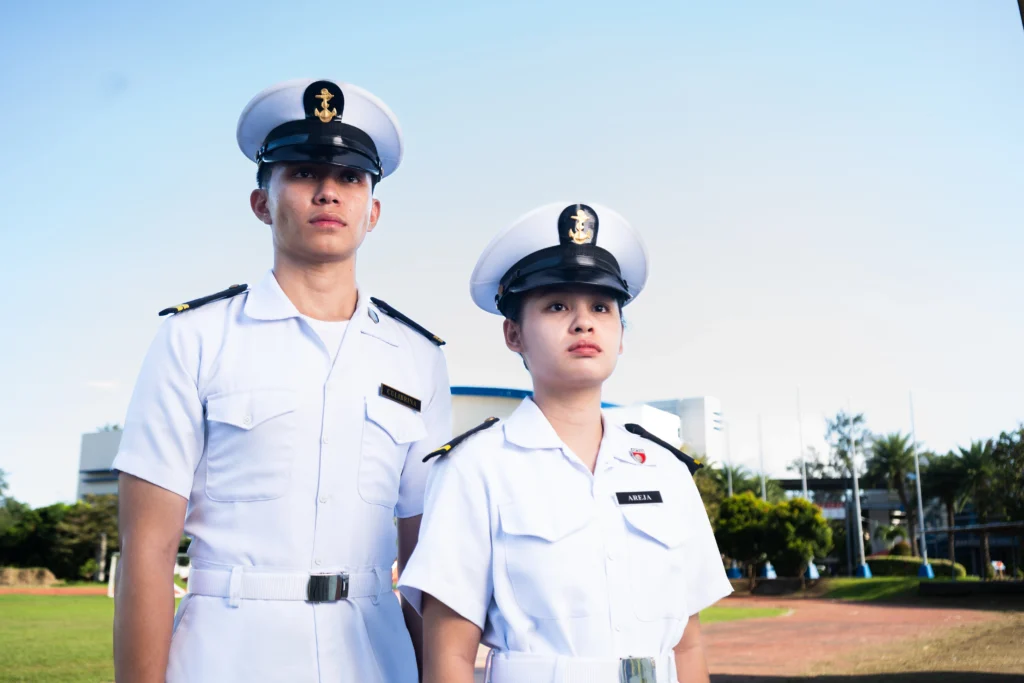
The commitment to a resilient maritime future also involves addressing diversity. Historically male-dominated, the maritime industry is undergoing a significant transformation. Efforts are being made to break the misconception that women cannot succeed in this field, with gender inclusion gaining recognition. By fostering an environment of grit, heart, and purpose, Mapúa MCL is empowering female mariners, whose participation is crucial for addressing the growing talent shortage and building a more equitable and innovative maritime sector.
Charting Your Future at Mapúa MCL
By integrating STCW compliance, state-of-the-art facilities, continuously updated curricula, and crucial soft skills development, Mapúa MCL produces graduates who are globally competitive, professionally resilient, and equipped with the technical knowledge necessary to operate and maintain ship engine systems safely and efficiently.
Graduates are prepared for dynamic environments and are positioned to make immediate and impactful contributions, serving as vital links in global trade. They are not just trained to follow; they are molded to exhibit the discipline, innovation, and leadership qualities essential to excel in a demanding global industry.
If you are ready to launch a global maritime career, explore how Mapúa MCL can equip you for impactful contributions to the maritime sector.
FAQs
What maritime programs are offered in Mapúa MCL?
The Mapúa-PTC College of Maritime Education and Training (CMET) offers the Bachelor of Science in Marine Transportation and the Bachelor of Science in Marine Engineering. The Bachelor of Science in Marine Transportation covers the education and training for Officers in Charge of a Navigational Watch under Regulation II/1 of the STCW Convention.
On the other hand, the Bachelor of Science in Marine Engineering prepares students for Officers in Charge of an Engineering Watch under Regulation III/1 of the STCW Convention. The curricula are continually reviewed to comply with the latest industry standards.
What types of careers are available to BS Marine Transportation graduates?
BS Marine Transportation graduates are primarily trained to become competent merchant marine deck officers on seagoing ships of 500 gross tonnage or more. Graduates are qualified to pursue a professional career at sea as global maritime practitioners or advanced studies in related maritime specialization fields.
What types of careers are available to BS Marine Engineering graduates?
Completing a BS Marine Engineering degree prepares students for exciting careers at sea as a marine engineer, engine officer, or maintenance supervisor aboard commercial vessels, cruise ships, or offshore platforms. Opportunities also exist in shore-based operations such as technical superintendents, shipbuilding, maritime logistics companies, maritime education, and government agencies.
How does the training prepare students to be globally competitive and resilient?
Students are trained to use appropriate techniques, skills, and modern tools in the practice of their profession and apply knowledge in mathematics, science, and technology to solve profession-related problems.
Through the “Beyond the Deck” project—a soft skills development program in partnership with the Fair Training Center (FTC)—maritime students are equipped with essential soft skills to thrive professionally and personally as migrant seafarers.