Mapúa MCL and UEU Enhance Global Collaboration Through Student and Faculty Mobility
From December 7 to 13, 2025, Mapúa Malayan Colleges Laguna (Mapúa MCL), through its Office for External Linkages, Internationalization, and Transnational Education (ELITE), partnered once again with Universitas Esa Unggul (UEU) to facilitate a comprehensive student and faculty mobility program. Both institutions are powered by Arizona State University (ASU), recognized as the No. 1 university in innovation in the United States, further strengthening the collaboration through a shared commitment to globally competitive and innovation-driven education.
This collaboration is part of Mapúa MCL’s ongoing commitment to internationalization, providing students and faculty with opportunities to engage in academic learning, cultural immersion, and cross-border exchanges that foster global perspectives and collaborative competencies.
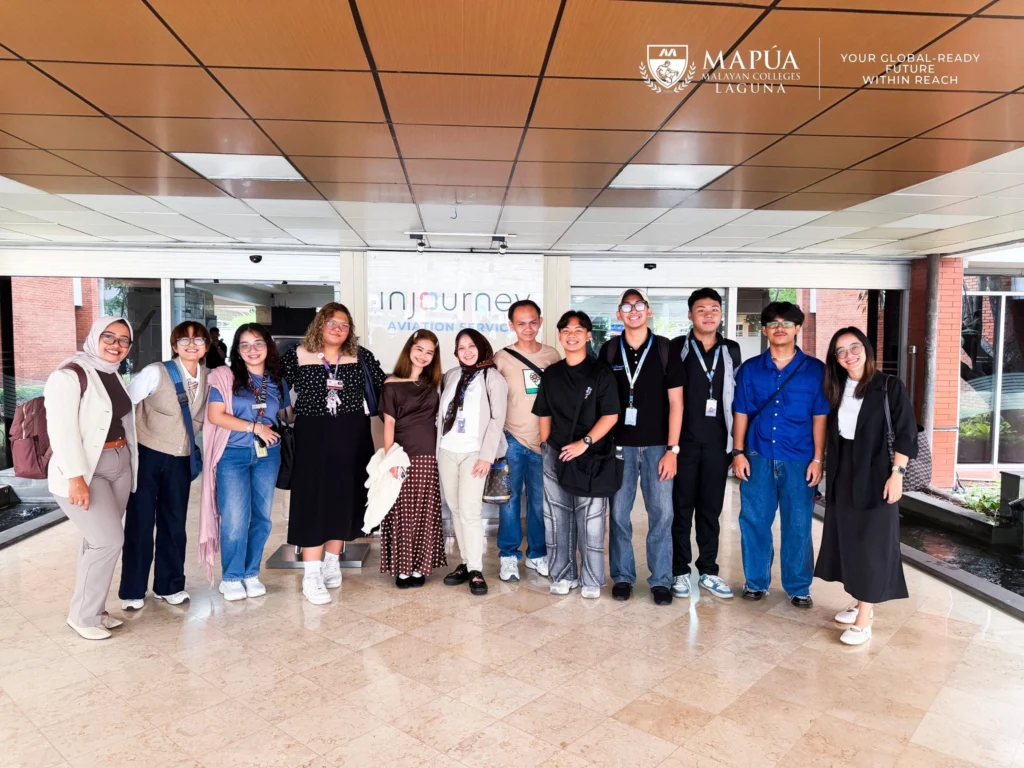
Representing Mapúa MCL were Prof. Banjie Sarmiento, Biology Program Chair, and Prof. Samantha Latorre, B.S. Psychology faculty member. They were joined by a delegation of
eight B.S. Psychology students: Charles Laurence Adayo, Czhakkia Laynne Tolentino, Jermaine Ian Salazar, Mikaela Palacios, Roby Allyssa Herras, Sean Dante Laguilles, and Stella Maris Buñi, and one B.S. Biology student, Allia Deveza.
During the weeklong program, students participated in interactive classroom sessions, hands-on workshops, and community engagement activities, giving them firsthand exposure to international teaching methodologies, research practices, and social contexts. Through these activities, students not only enhanced their academic knowledge but also developed cultural sensitivity and cross-cultural communication skills, essential competencies in today’s globalized world.

Meanwhile, Prof. Sarmiento and Prof. Latorre were invited as guest lecturers, sharing their expertise through specialized sessions on biology and psychology. Their lectures provided opportunities for knowledge exchange, strengthening the academic partnership between Mapúa MCL and UEU, and demonstrating the benefits of faculty collaboration in international education.
The program also emphasized cultural understanding and social engagement. Students and faculty participated in community-based activities designed to promote social responsibility, empathy, and collaborative problem-solving. These experiences helped participants appreciate diverse perspectives, fostering a deeper understanding of how education and community development intersect in different cultural settings.
Reflecting on the experience, Roby Allyssa Herras shares, “Joining the immersion program was an unforgettable experience. I appreciated UEU’s warm hospitality, the helpful faculty, including Doc Nina (Dr. Maharsi Anindyajati), whom I already met when she was the visiting lecturer in Mapua MCL, and Miss Kamalia, as well as our very supportive student buddies who guided us throughout our stay. The well-maintained, student-friendly facilities, including spacious libraries and fully equipped laboratories, really enriched our academic experience. Beyond academics, the immersion allowed me to observe the cultural similarities and differences between the Philippines and Indonesia while building lasting connections and memories with my peers and our professors.”
Through this initiative, Mapúa MCL also advanced the United Nations Sustainable Development Goals (SDGs) by integrating activities that promote good health and well-being,
quality education, and international partnerships. Students benefited from workshops and community programs that encouraged healthy practices and social responsibility, while academic exchanges and lectures enhanced the quality of learning experiences. At the same time, the collaboration strengthened sustainable partnerships between Mapúa MCL and UEU, highlighting the institution’s commitment to nurturing future-ready leaders capable of contributing meaningfully to society.
The success of this mobility program underscores Mapúa MCL’s ongoing mission to strengthen international collaborations, enhance student learning experiences, and promote cross-cultural understanding. With programs like these, the institution continues to prepare its students not just as professionals, but as global citizens ready to make meaningful contributions to society.